
Key takeaways
- Onion juice benefits for hair come from sulphur, flavonoids (kaempferol and quercetin), and the enzyme catalase, which work on follicles, scalp health, and oxidative stress respectively.
- A 2014 study found that 86.9% of participants who applied onion juice twice daily saw measurable hair regrowth after 6 weeks, compared to just 13% in the control group.
- Apply 2–3 times per week, leave on for 30–60 minutes, and wash out with a mild sulphate-free shampoo.
- Results start showing within 4–6 weeks. Visible growth typically takes 2–3 months of consistent use.
- Always patch test first, especially on sensitive scalps.
What makes onion juice work for hair?
Onion juice benefits hair through three main compounds: sulphur, which supports keratin and collagen production and improves blood circulation to hair follicles; flavonoids (kaempferol and quercetin), which have anti-inflammatory and antioxidant properties that protect follicles and reduce scalp inflammation; and catalase, an enzyme that breaks down hydrogen peroxide at the roots and may help delay premature greying. Together, these compounds address hair fall, slow growth, and scalp imbalance at the source.
Onion has been used in traditional hair care across cultures for generations. The science now largely supports those uses. Whether hair fall, a flaky scalp, or slow growth is the concern, onion juice works on several of those problems through one ingredient. Understanding the common causes of hair fall helps put onion juice's role into context — it addresses the scalp-health and inflammation angle rather than dietary or hormonal causes.
5 benefits of onion juice for hair
1. Promotes hair growth
Sulphur is a building block of keratin, the structural protein hair is made from. Onion juice is rich in sulphur, and when massaged into the scalp, it improves blood circulation to follicles, which delivers more nutrients and oxygen to support active growth. The flavonoids quercetin and kaempferol also widen blood vessels at the scalp level (vasodilation), amplifying this effect.
A 2014 study published in the Journal of Dermatology tested onion juice on 38 people with alopecia areata. Participants who applied onion juice to their scalp twice daily showed 86.9% hair regrowth after 6 weeks. The control group, which used tap water, saw only 13% regrowth. While this was a small study focused on alopecia, the follicle-stimulating mechanism applies to general hair thinning too.
2. Reduces hair fall
Scalp inflammation damages follicles and shortens the active growth phase of the hair cycle. The quercetin in onion juice calms this inflammation at the root level. Sulphur also repairs damaged hair shafts, making strands less prone to breaking mid-length. For hair fall related to scalp health and follicle weakening, onion juice addresses both the cause and the symptom. If hair fall tends to peak during certain seasons, it is worth reading about why hair fall increases during the monsoon season alongside starting an onion juice routine.
3. Treats dandruff
Onion juice has natural antifungal and antimicrobial properties. Dandruff is often caused by an overgrowth of the fungus Malassezia furfur on the scalp. Onion's antifungal activity helps bring the scalp's microbial balance back to normal, which reduces flaking over time. For persistent dandruff, combining onion juice with the right shampoo for hair fall and dandruff gives a more complete solution. Also see this guide on how to get rid of dandruff for a fuller picture.
4. Improves hair texture and shine
Regular use of onion juice nourishes the hair cuticle, sealing moisture in and smoothing the outer layer of each strand. The result, over several weeks, is hair that feels softer and looks noticeably shinier without any product coating. This comes from the hair itself being in better condition, not a surface effect.
5. Delays premature greying
Onions contain catalase, an enzyme that breaks down hydrogen peroxide. Hydrogen peroxide builds up at the hair roots as a natural by-product of cell processes, and this buildup is one of the contributors to premature greying. By reducing this oxidative load, catalase may help hair retain its natural colour longer. There is no peer-reviewed evidence that onion juice reverses grey hair that has already appeared, but consistent use before significant greying begins may help slow the process. For a broader look at nutrients that support hair health, the guide to vitamins that boost hair growth and strength covers what to pair with a topical routine.
How to make onion juice for hair at home
No special equipment is needed.
What you need:
- 2–3 medium fresh onions
- A blender or grater
- A fine muslin cloth or sieve
-
A clean glass jar for storage
Steps:
- Peel and roughly chop the onions into smaller pieces.
- Blend or grate into a paste.
- Pour the paste over the muslin cloth or sieve and press firmly to extract the juice. Discard the pulp.
- Transfer the juice to a sealed glass jar and store in the refrigerator.
- Use within one week. Onion juice kept longer than a week loses potency and can cause scalp irritation.
Optional add-ins to make application easier:
- 1 teaspoon coconut oil (moisturises while the juice works)
- 1 teaspoon aloe vera gel (soothes sensitive scalps)
-
2–3 drops of rosemary essential oil (helps mask the smell and supports circulation)
How to use onion juice for hair growth: step by step
-
Patch test first. Apply a small amount behind the ear or on the inner forearm. Wait 24 hours. If there is no redness or itching, proceed.
-
Start with clean, dry hair. Wash with a mild, sulphate-free shampoo beforehand to remove buildup and open the scalp for better absorption.
-
Section the hair. Part into 4–6 sections so the juice reaches the scalp evenly rather than sitting on top of the hair.
-
Apply directly to the scalp. Use fingertips or a cotton ball. Focus on areas of thinning or concern (usually the crown and hairline).
-
Massage for 5–7 minutes. This step is not optional. Massage stimulates blood flow and helps the sulphur and flavonoids absorb into the follicles rather than just sitting on the surface.
-
Leave on for 30–60 minutes. Those with sensitive scalps should start at 20–30 minutes and increase gradually.
-
Rinse thoroughly with a mild sulphate-free shampoo. Follow with a conditioner as usual.
Frequency: 2–3 times per week. More than this will not accelerate results and may irritate the scalp.
Amount: 2–4 tablespoons for average-length hair. Adjust based on hair thickness and length.
Who should be cautious with onion juice
Onion juice works well for most hair types, including fine, thick, curly, and straight. It suits anyone dealing with mild to moderate hair fall, slow regrowth, scalp flaking, or dull texture.
Take care in the following situations:
- Sensitive scalp or eczema: The sulphur compounds can sting if left on too long. Always dilute with water or oil and limit exposure to 20 minutes until tolerance is established.
- Onion allergy: Skip topical use entirely if eating onions causes a reaction.
- Colour-treated hair: The mild acidity of onion juice may slightly shift tone, especially on light or bleached hair. Test on a small section first.
- Open scalp wounds or active dermatitis: Wait until the scalp has healed before introducing any topical treatment.
Common mistakes that reduce results
Skipping the massage. Applying and leaving is not enough. The massage is what moves nutrients into the follicle and stimulates circulation. Without it, much of the benefit is lost.
Using expired juice. Onion juice stored beyond a week starts to ferment and can cause irritation rather than growth. Always make a fresh batch weekly.
Inconsistent application. Using it once or twice and expecting results will lead to disappointment. The 4–6 week timeline from most studies assumes regular, consistent use.
Not rinsing properly. Residual onion juice left on the scalp can dry out the skin and cause flaking that looks like dandruff. Wash thoroughly with a mild shampoo each time.
Applying to dirty hair. Buildup on the scalp blocks absorption. A light cleanse before applying makes the routine significantly more effective.
Pairing onion juice with a plant-based hair care routine
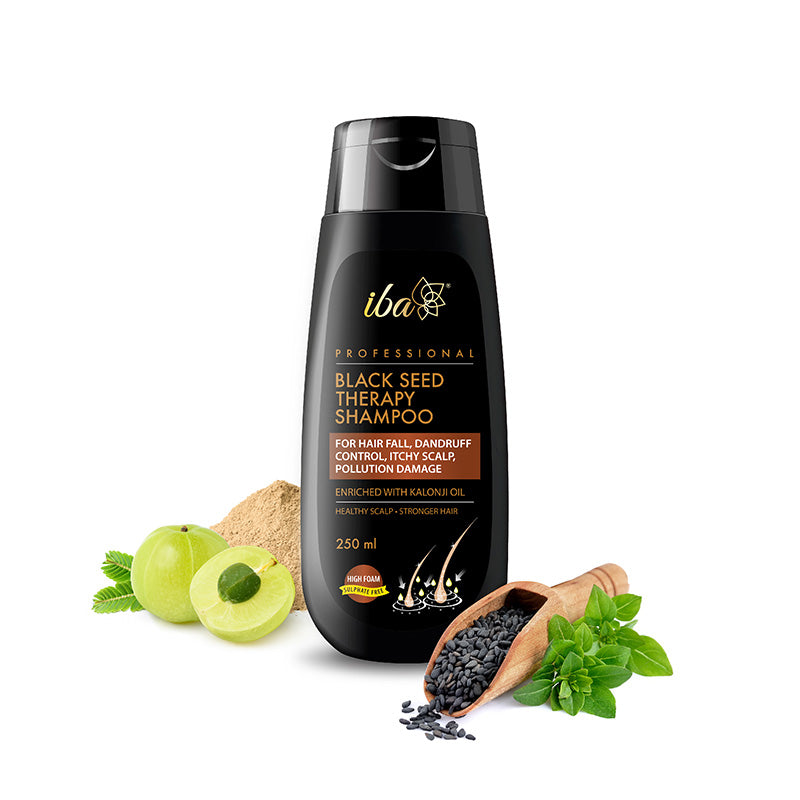
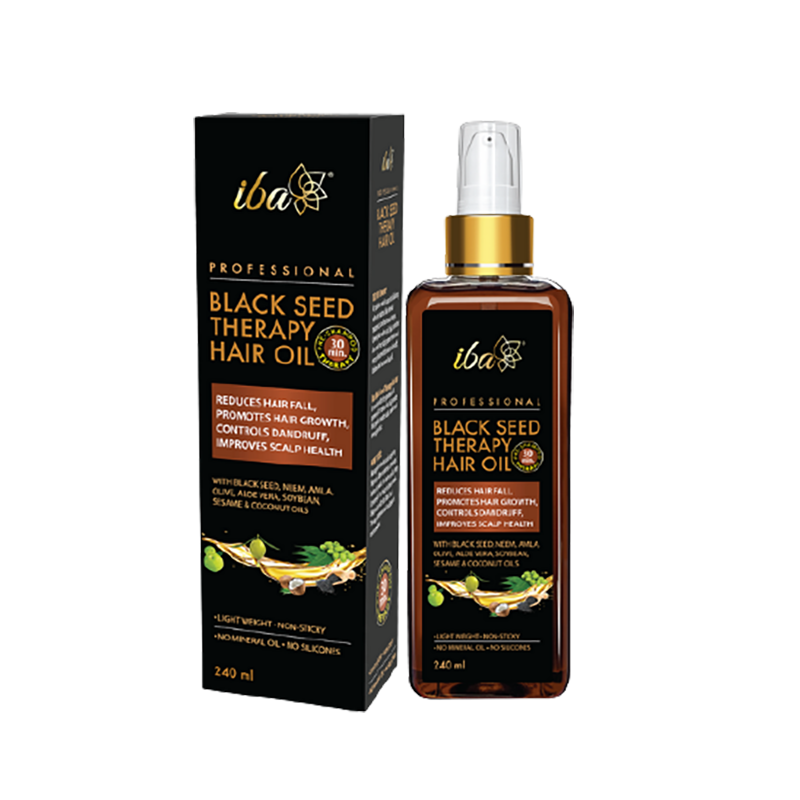
Onion juice is most effective when the wash-day routine supports the same goals. Iba's Black Seed Therapy Shampoo is a good pairing because kalonji (black seed) oil shares onion juice's scalp-strengthening and hair fall-reducing approach, without harsh sulphates or parabens that would strip the benefits away. On oil days, the Black Seed Therapy Hair Oil works on similar principles and can be applied on alternate days to keep the scalp nourished between onion juice treatments.

For a complete routine built around reducing hair fall and improving scalp health, Iba's hair care collection covers shampoos, conditioners, oils, and serums, all vegan, cruelty-free, sulphate-free, and paraben-free.
If you are still figuring out which shampoo formula works for your hair type, this guide on how to choose the right shampoo breaks down the key factors. And if weighing up whether to add a hair oil or serum to the mix, the hair oil vs hair serum comparison is a good reference point.
What to expect and when
Most people notice reduced shedding and improved softness within 4–6 weeks. Visible new growth, where short new hairs appear along the hairline or in areas of thinning, typically takes 2–3 months depending on individual hair cycles. A 2014 study found 86.9% of participants saw measurable regrowth at the 6-week mark with twice-daily application, though once or twice weekly is more sustainable for most people.
Results are cumulative. Each application builds on the last. The people who give up at 3 weeks having seen nothing are almost always the ones who stop just before the timeline would have delivered results.
For a broader set of habits that complement topical treatments, these healthy hair tips cover diet, stress, and routine factors that work alongside what goes on the scalp.
Frequently asked questions
Q: Does onion juice really help hair grow?
Yes, with realistic expectations. The sulphur in onion juice improves blood circulation to follicles and supports keratin production. A 2014 study found that 86.9% of people with alopecia areata who applied onion juice twice daily saw new hair growth after 6 weeks. The mechanism applies to general thinning too, though results take 4–6 weeks of consistent use to show.
Q: How often should I use onion juice for hair growth?
Two to three times per week is the right frequency. More frequent use does not speed up results and risks scalp irritation from the sulphur compounds. Consistency over weeks matters far more than how often it is applied in a single week.
Q: How long does onion juice take to work on hair?
Reduced hair fall and improved texture typically show within 4–6 weeks. Visible new growth takes longer, usually 2–3 months, depending on the individual hair cycle. Patience and consistent application are the two non-negotiable factors.
Q: Can I use onion juice if I have a sensitive scalp?
Yes, with adjustments. Dilute the juice with equal parts water or add a teaspoon of coconut oil before applying. Start with a 20-minute leave-on time rather than 60 minutes. Always do a patch test first and stop immediately if there is any burning or persistent itching.
Q: Why does onion juice smell so strong and how do I get rid of it?
The sulphur compounds responsible for the hair benefits are also responsible for the smell. Rinsing thoroughly with a mild shampoo removes most of it. Adding a few drops of rosemary or peppermint essential oil to the juice before applying helps reduce the odour during treatment. An apple cider vinegar rinse (2 tablespoons in 1 cup water) after shampooing also neutralises residual smell.
Can I mix onion juice with other natural ingredients?
Yes. Coconut oil adds moisture and makes application easier. Aloe vera gel soothes the scalp and reduces the sting for sensitive skin. Honey acts as a natural humectant. A teaspoon of lemon juice also helps with smell while adding mild antifungal properties. Avoid mixing with strong active ingredients like salicylic acid or strong serums on the same day.
Q: What is the best way to store homemade onion juice?
Store in a sealed glass jar in the refrigerator. Use within one week. Beyond that, the juice degrades and may irritate the scalp rather than help it.
Q: Is onion juice good for dandruff?
Yes. Onion's antifungal properties work against Malassezia furfur, the fungus most commonly responsible for dandruff. It is not a first-line treatment for severe dandruff but works well for mild to moderate flaking, especially when paired with a good anti-dandruff shampoo.