
TL;DR: Key Takeaways
- Prep your canvas properly: Clean, moisturized skin with appropriate primer prevents patchiness and extends foundation wear.
- Test shades on your jawline: The right foundation shade disappears into skin under natural light, not on your hand or wrist.
- Build coverage in thin layers: Start with a pea-sized amount and build gradually rather than applying one heavy coat.
- Choose tools based on desired finish: Dense brush for coverage, damp sponge for seamless blend, fingers for quick, natural application.
- Match formula to your needs: Dewy foundations for dry skin and everyday wear, matte waterproof formulas for oily skin and long days.
- Set strategically, not everywhere: Powder only areas that crease or shine (T-zone, smile lines) to maintain a natural, skin-like finish.
A great base looks effortless, feels lightweight, and lasts. This guide breaks down how to apply foundation, when to switch tools, and the smartest routine for shade, finish, and wear time.
The Prep That Makes or Breaks Your Base
A smooth, hydrated canvas prevents patchiness and helps color sit true. Before asking how to apply foundation on the face, set the stage.
- Cleanse → treat (serum/actives if any) → moisturize.
- Wait until layers feel absorbed (about a minute per step works for most). Dermatologists and editors consistently suggest letting skincare set rather than piling on over damp layers.
- Apply sunscreen during the day.
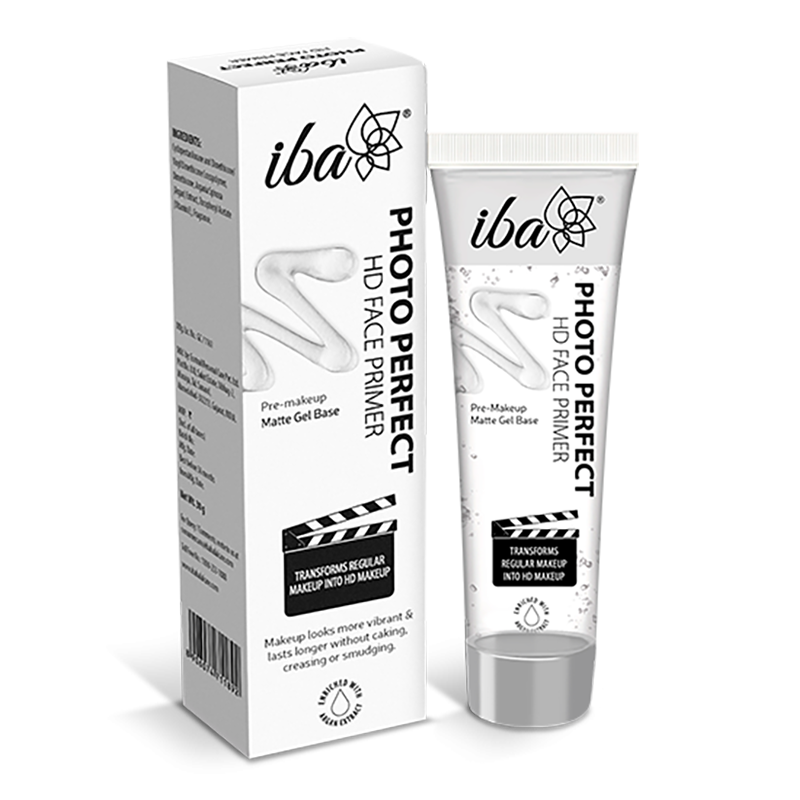
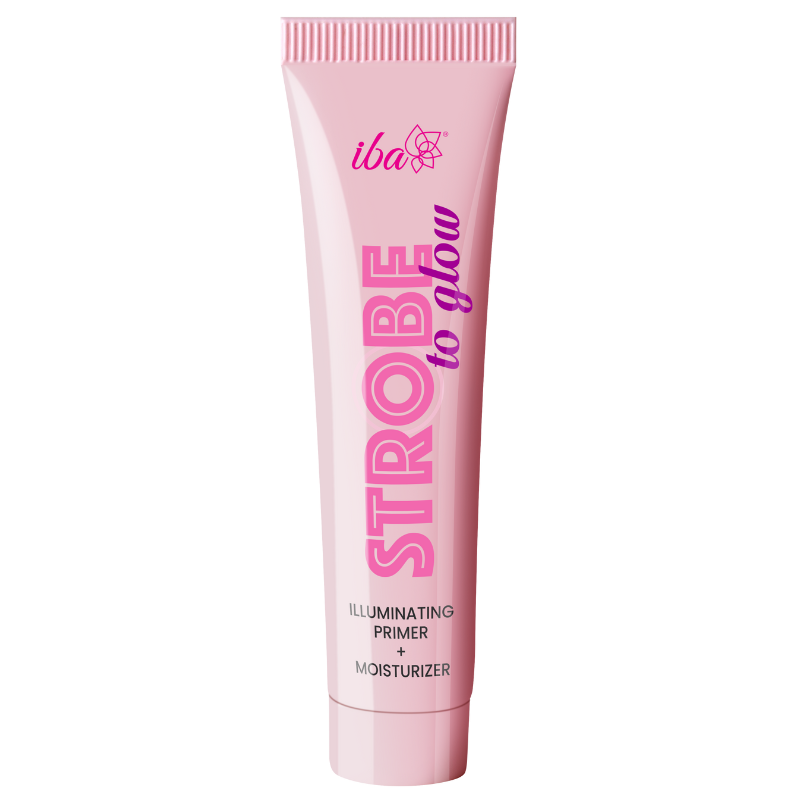
- Use a primer that suits your skin goals (blurring for pores, gripping for longevity, illuminating for glow). A light primer layer extends wear and evens texture.
Pro Tip: If short on time, press products in with palms or a clean sponge to speed absorption.
Shade Match 101: Choosing the Right Foundation Shade
Shade accuracy is half the battle won. Many shoppers still want help with shade selection. That’s normal, and fixable with a quick process.
Quick Undertone Finder
|
Check |
Cool Undertone |
Neutral Undertone |
Warm/Golden Undertone |
|
Vein color |
Bluish / purple |
Mix of blue & green |
Green / olive |
|
Jewelry test |
Silver flatters more |
Both flatter |
Gold flatters more |
|
Burns/Tans |
Burns, then tans |
Mix |
Tans easily |
How to test shades (jawline method):
- Stripe 2 to 3 options along the jaw and onto the neck.
- The right shade disappears into the skin under natural light.
- If the foundation tends to darken after wear, test for oxidation: wear for 15 to 20 minutes before deciding. Primer and proper skincare can help.
Pro Tip: Keep one “summer” and one “winter” shade if skin tone shifts seasonally.
Formula & Finish: Match Foundation to Situation
Before learning how to apply foundation, pick what fits your day.
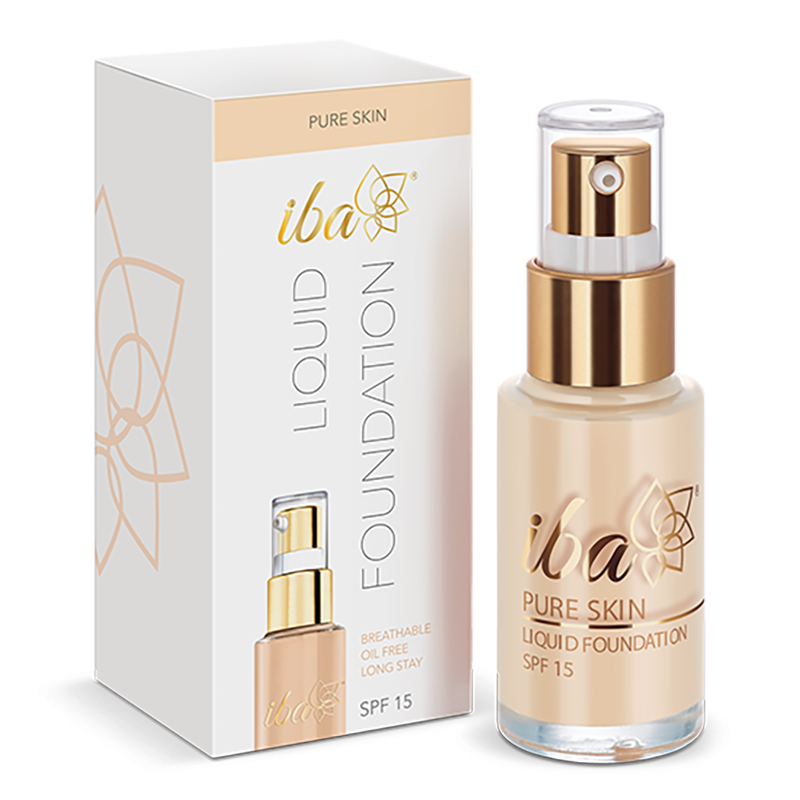
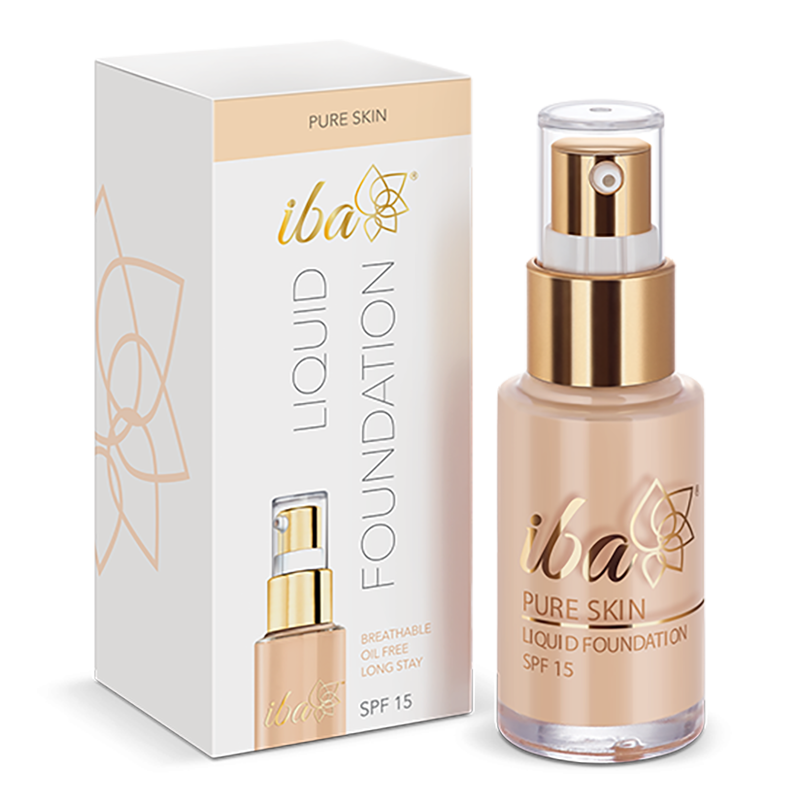
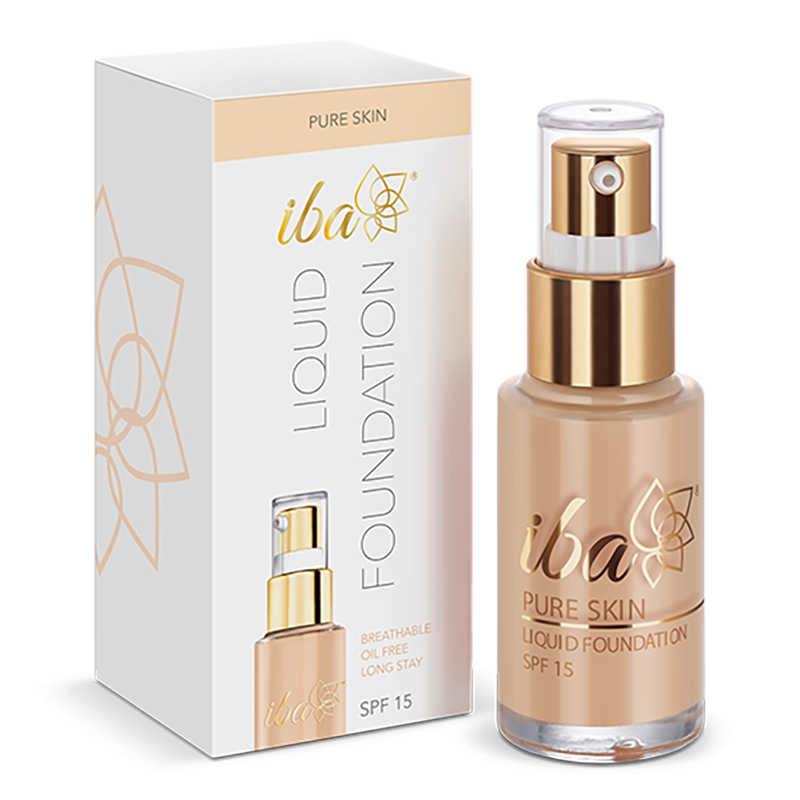
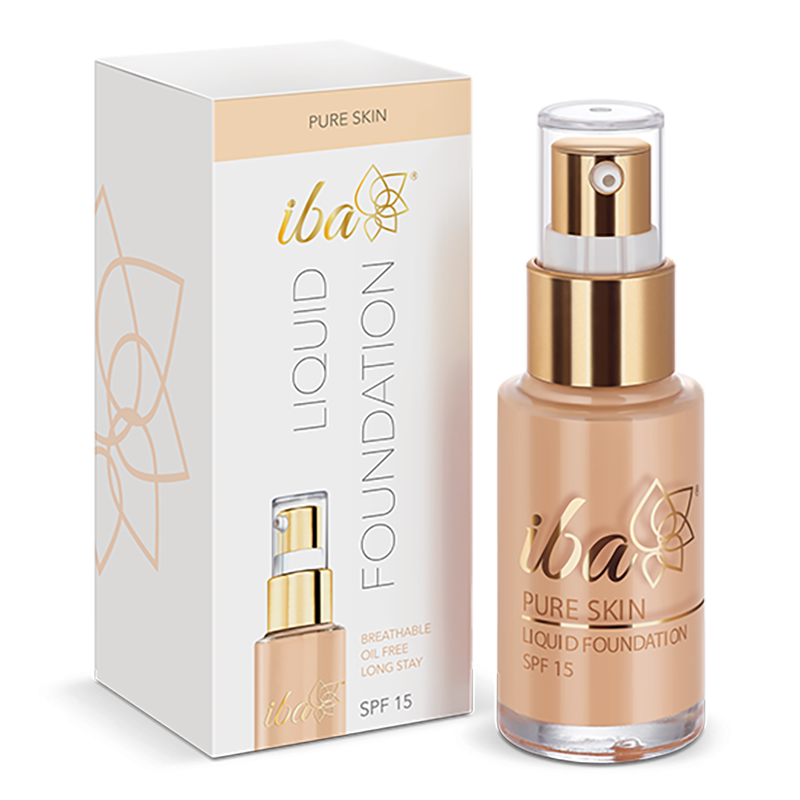
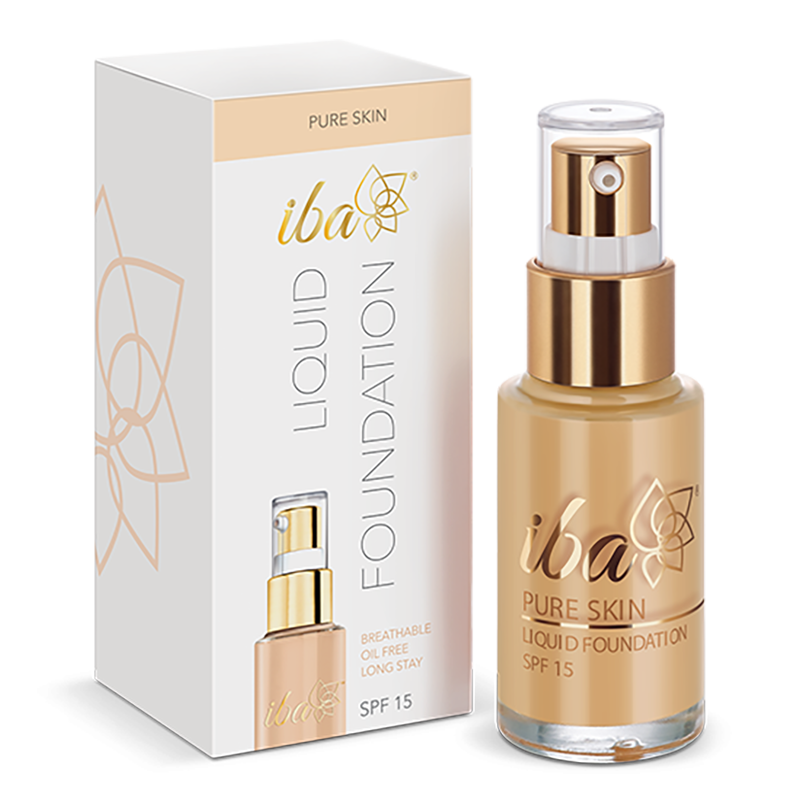
- Want breathable glow for everyday? Try Iba Pure Skin Liquid Foundation SPF 15. It is ultra-blendable, breathable, with a dewy finish and skincare boosters like Aloe Vera and Vitamin E. Ideal for normal to oily or combo skin that prefers a natural sheen.
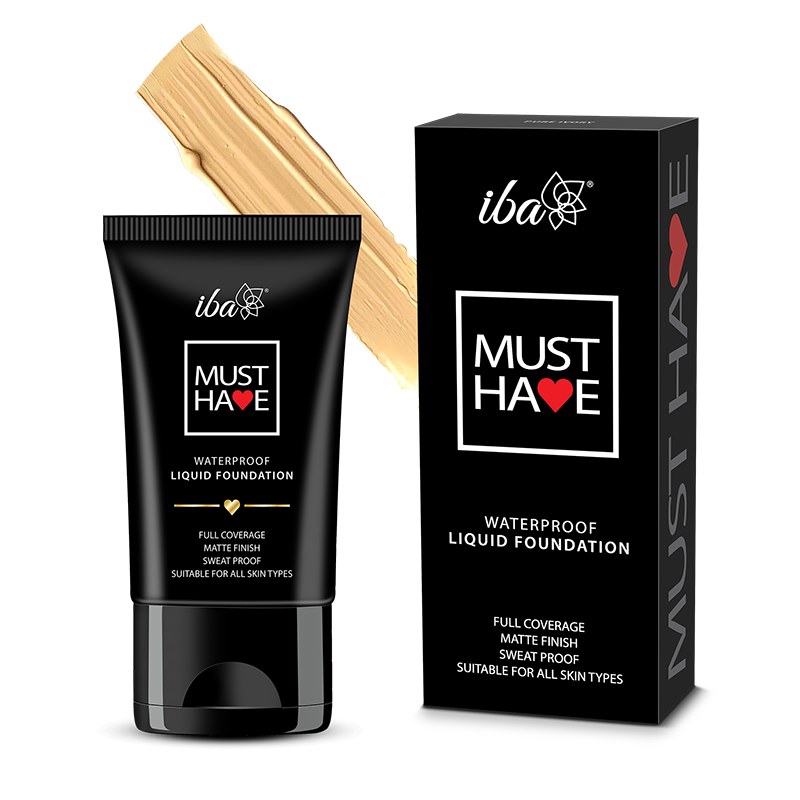
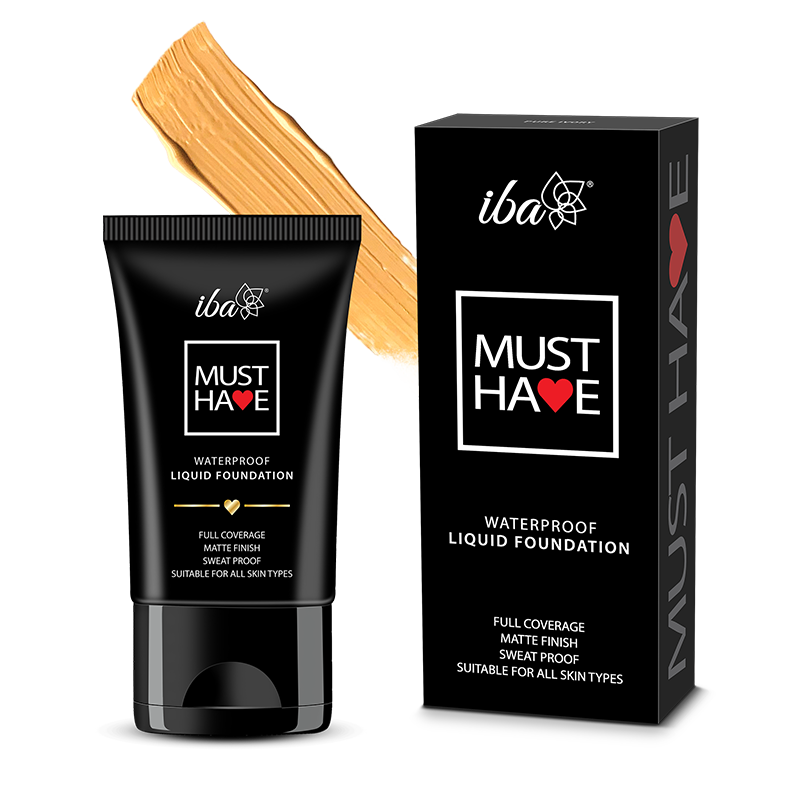
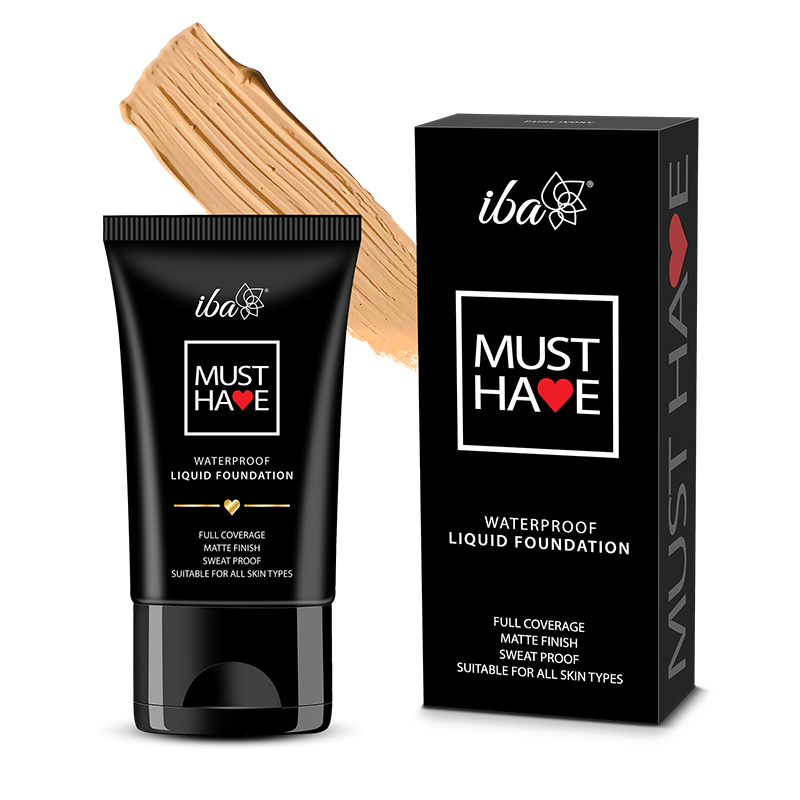
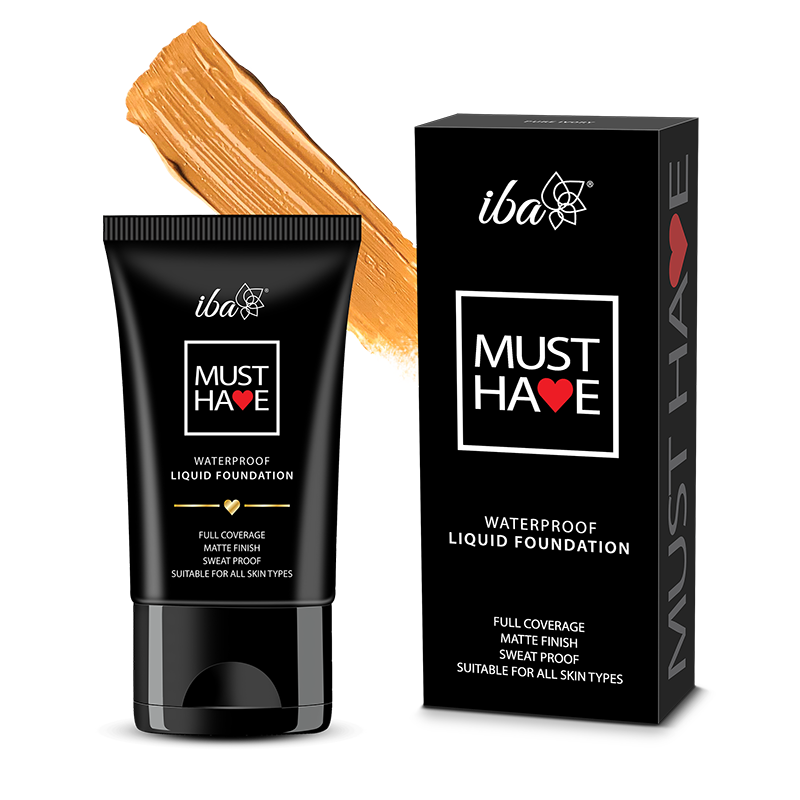
- Need budge-proof coverage for long days, events, or humidity? Iba Must Have Waterproof Liquid Foundation offers full coverage with a matte finish, is sweat- and waterproof for up to 24 hours, and is free from parabens and alcohol; it’s vegan, cruelty-free, and halal certified.
Both options pair well with a light primer and set beautifully with a sheer powder where needed.
Types of Liquid Foundation Finishes
Not sure which finish suits you? Liquid foundation comes in various finishes, each serving different skin needs and preferences. Use this as a quick reference before you buy or apply:
| Finish Type | Best For | Coverage Level | Longevity |
|---|---|---|---|
| Dewy | Dry to normal skin | Light to medium | 6–8 hours |
| Matte | Oily to combination skin | Medium to full | 10–12 hours |
| Satin | All skin types | Medium | 8–10 hours |
| Natural | Normal skin | Light to medium | 6–8 hours |
Pro Tip: If you have combination skin, try a satin or natural finish, it controls shine in the T-zone without flattening the rest of the face. For a hybrid result, apply a dewy base to the cheeks and lightly press matte powder only on the T-zone.
Foundation Tools & Results: Brush vs Sponge vs Fingers
Different tools create different finishes. Here’s the no-nonsense breakdown backed by pro tips.
|
Tool |
Best For |
Finish & Coverage |
How to Use |
Notes |
|
Dense foundation brush |
Speed, medium-full coverage |
Polished, slightly higher coverage |
Buff or stipple in thin layers |
Clean regularly to avoid streaks |
|
Damp sponge |
Seamless blending, quick fixes |
Natural, skin-like; buildable |
Bounce/press, don’t drag |
Dampen well to reduce product soak-up |
|
Fingers |
Creamy formulas, quick on-the-go |
Sheer-medium; warmth helps melt product |
Pat and roll, then finish with a sponge |
Keep hands clean; blend edges carefully |
Hybrid method: Lay down with a brush, press-finish with a damp sponge for a streak-free, second-skin effect.
Step-by-Step: How to Apply Foundation (That Actually Stays)
Read this once, then follow along in the mirror. Works for both sheer and full coverage, and especially helpful as a foundation for beginners.
- Prime lightly where needed (T-zone for shine, cheeks for smoothing).
- Map the face: dot a pea-sized amount across cheeks, chin, and forehead.
- Blend outward from the center using your chosen tool. Start thin; build only where needed.
- Edge work: feather into hairline, around brows, and under jaw so there’s no line of demarcation.
- Around nose & eyes: switch to a smaller brush or the tip of your sponge; press rather than swipe so product sits evenly in curved areas.
- Spot perfect: add a half-pea where redness peeks through; if you use concealer, keep it minimal and targeted.
- Set strategically: dust translucent powder on areas that crease or shine (sides of nose, smile lines, chin). Keep cheeks luminous if you like the glow.
- Lock it in: a few mists of setting spray meld layers and reduce powdery cast.
- Check daylight: step near a window to confirm shade and blending are seamless.
Still asking how to apply foundation on the face for a natural finish? Use less than you think, keep the center polished, and let real skin show at the perimeter.
Foundation Technique Tweaks by Skin Type & Finish Goals
Before choosing filters or extra layers, adjust the application to the skin in front of you.
Dry or Dehydrated Skin (Natural, Radiant)
- Hydrating moisturizer first; give it a minute to settle.
- Illuminating or hydrating primer; apply foundation with a damp sponge and pressing motions.
- Choose dewy formulas and cream cheek products; set only where necessary.
Oily or Humid Conditions (Matte, Long Wear)
- Oil-controlling primer on T-zone; use a brush to place product, then sponge-press to seal.
- Go matte or semi-matte. Try Iba Must Have Waterproof Liquid Foundation for full-day wear that resists sweat and transfer.
- Set T-zone and smile lines; consider a long-wear setting spray.
Sensitive or Reactive Skin
- Choose gentle, fragrance-free formulas; patch test when trying something new. Keep tools clean.
Product Pairings (Iba Picks That Work)
A quick guide to slot Iba bases into any routine. Use this whether you’re a pro or a beginner.
- Everyday glow & office-friendly coverage: Iba Pure Skin Liquid Foundation SPF 15 is lightweight, breathable, dewy, boosted with Aloe Vera & Vitamin E; great for normal to oily/combination skin that still wants radiance.
- Occasions, weddings, long commutes, or monsoon days: Iba Must Have Waterproof Liquid Foundation is full coverage, matte, 24-hour waterproof/sweatproof with Vitamin E, Coconut Water, and Willow Bark Extract; vegan, cruelty-free, halal.
Pro Tip: For glow with control, mix one drop of liquid highlighter into the dewy base, or press a touch of powder on the T-zone only.
Common Foundation Mistakes and Fast Fixes
- Cakey build-up: Too much at once. Thin layers, press between layers, and set only where needed.
- Wrong shade or undertone: Re-test on jaw in daylight; consider a neutralizer (peach corrector for dullness, green for redness) so you can use less base.
- Oxidation (darkening after wear): Balance oil, use primer, and test wear for 15 to 20 minutes before purchase. Choose a shade a half-step lighter if you consistently oxidize.
- Patchiness around nose/eyes: Switch to tapping motions and a smaller tool; set lightly afterward.
- Flashback from SPF powders: Use a soft brush and avoid heavy flash-heavy powders at night photos.
Final Thoughts
Mastering how to apply foundation is a simple system: prep lightly, match shade in daylight, build in thin layers, and choose the tool that suits your finish. If you’re choosing the right foundation shade for everyday glow, test Iba’s dewy Pure Skin Liquid Foundation; if you need long-wear power, try the 24-hour matte Must Have Waterproof Liquid Foundation. Both pair well with a light primer and targeted setting.
See current deals and combos on Iba’s Coupons Code Page.
From Affordable to Luxury: Find the Right Foundation for Your Budget
Foundation Under 400 | Foundation 500 | Foundation 600 | Foundation 1000
Frequently Asked Questions
Q. How to apply foundation for a natural finish?
Use a sheer layer and blend from the center out. Keep cheeks luminous and set only the T-zone. This is the core of how to apply foundation for skin that still looks like skin.
Q. What’s the best way to blend foundation evenly?
Place small dots, then press with a damp sponge. The bounce motion erases edges without streaks and keeps the product thin, an ideal approach for a foundation for beginners.
Q. Should I use a brush, sponge, or fingers to apply foundation?
All three work. Brush for speed and coverage, sponge for seamless blend, fingers for quick on-the-go. Combine brush application with a sponge press for the most polished result, which is smart when learning how to apply foundation on the face.
Q. How to choose the right foundation shade for my skin tone?
Identify undertone (cool, neutral, warm) and test along the jaw in daylight. Wait 15–20 minutes to check for oxidation before buying. This process makes choosing the right foundation shade straightforward.
Q. How much foundation should I use for full coverage?
Start with a pea-sized amount; build in thin layers only where needed. Full coverage comes from placement and layering, not a single heavy coat.
Q. How to apply foundation on dry vs oily skin?
Dry: hydrating base, dewy formula, minimal powder. Oily: gripping primer, matte or long-wear formula, targeted powder. If humidity is high, reach for a waterproof matte like Iba’s Must Have.
Q. What primer should I use before foundation application?
Blurring for pores, hydrating for dry patches, and gripping for longevity. A light coat helps the foundation hold and smooths texture.
Q. How to prevent foundation from looking cakey?
Use less product, press between layers, and set selectively. A fine mist at the end melts powders for a skin-like finish.
Q. How to apply foundation around the nose and eye area?
Switch to a smaller brush or the point of the sponge. Press and roll instead of swiping, so the product settles evenly in curves and doesn’t collect.
Q. How long should I wait between skincare and foundation application?
Let each layer absorb until touch-dry; about a minute is enough for most routines. Focus on feel over a strict timer.
Also Read
- Foundation vs. BB Cream: Which one is the Better Option for You?
- Liquid Foundation vs. Powder Foundation: Which is Better for Your Skin?
- Tips to Choose the Best Foundation Cream for Oily Skin
- Foundation Hacks for Long-Lasting Makeup
- Must Have Base Makeup Essentials – Foundation & Compact Powder
- 7 Expert-Recommended Foundations for Pale Skin - Iba