
Should sunscreen go on first, or does your skin need something underneath? This is a question that comes up for almost everyone trying to simplify their morning routine, and the answer depends on your skin type, the texture of your products, and the weather.
Getting it wrong can make sunscreen feel heavy, reduce hydration, or even lessen protection. Read along to learn the right way to layer your skincare, avoid common mistakes, and keep your skin protected effortlessly.
So, Can You Apply Sunscreen Directly?
Yes, you can apply sunscreen directly to your face. A good sunscreen works whether you use moisturiser underneath or not. The protection comes from the sunscreen itself, not from the layers below it. That said, the experience changes depending on your skin type.
- Oily or combination skin often does well with sunscreen applied directly. Skipping moisturiser keeps the face from feeling heavy, especially in humid weather.
- Dry or sensitive skin usually benefits from a layer of moisturizer before sunscreen. The moisturiser smooths the surface, helping sunscreen spread evenly.
- Normal skin can go either way. If your sunscreen contains hydrating ingredients like hyaluronic acid or sandalwood, you may not need a separate moisturiser.
What Happens When You Skip Moisturiser Under Sunscreen?
Not everyone needs both products. Here is how skipping moisturiser plays out across skin types:
|
Skin Type |
Without Moisturiser |
With Moisturiser |
|
Oily |
Feels lighter, less shine |
Can feel heavy, may cause breakouts |
|
Dry |
May feel tight, patchy application |
Smoother application, better comfort |
|
Combination |
Works well on the T-zone |
Helpful on dry patches (cheeks, jawline) |
|
Sensitive |
Risk of irritation from direct contact |
Creates a buffer, reduces irritation |
For most people in warm Indian weather, a lightweight SPF 50 sunscreen with built-in hydration is enough on its own. Save the moisturiser layer for winter or air-conditioned environments.

How to Apply Sunscreen on Face Correctly?
Knowing that you need sunscreen is one thing. Applying it right is where most people slip up. Here is a routine that takes less than two minutes.
Step 1: Start with a Clean Face
Wash your face with a gentle face wash to remove overnight oil and dirt. Sunscreen sticks better to clean skin.
Step 2: Apply Moisturiser
If you have dry or sensitive skin, apply a thin layer of face moisturizer and let it absorb for a minute. Oily skin types can skip this step.
Step 3: Use the Right Amount of Sunscreen
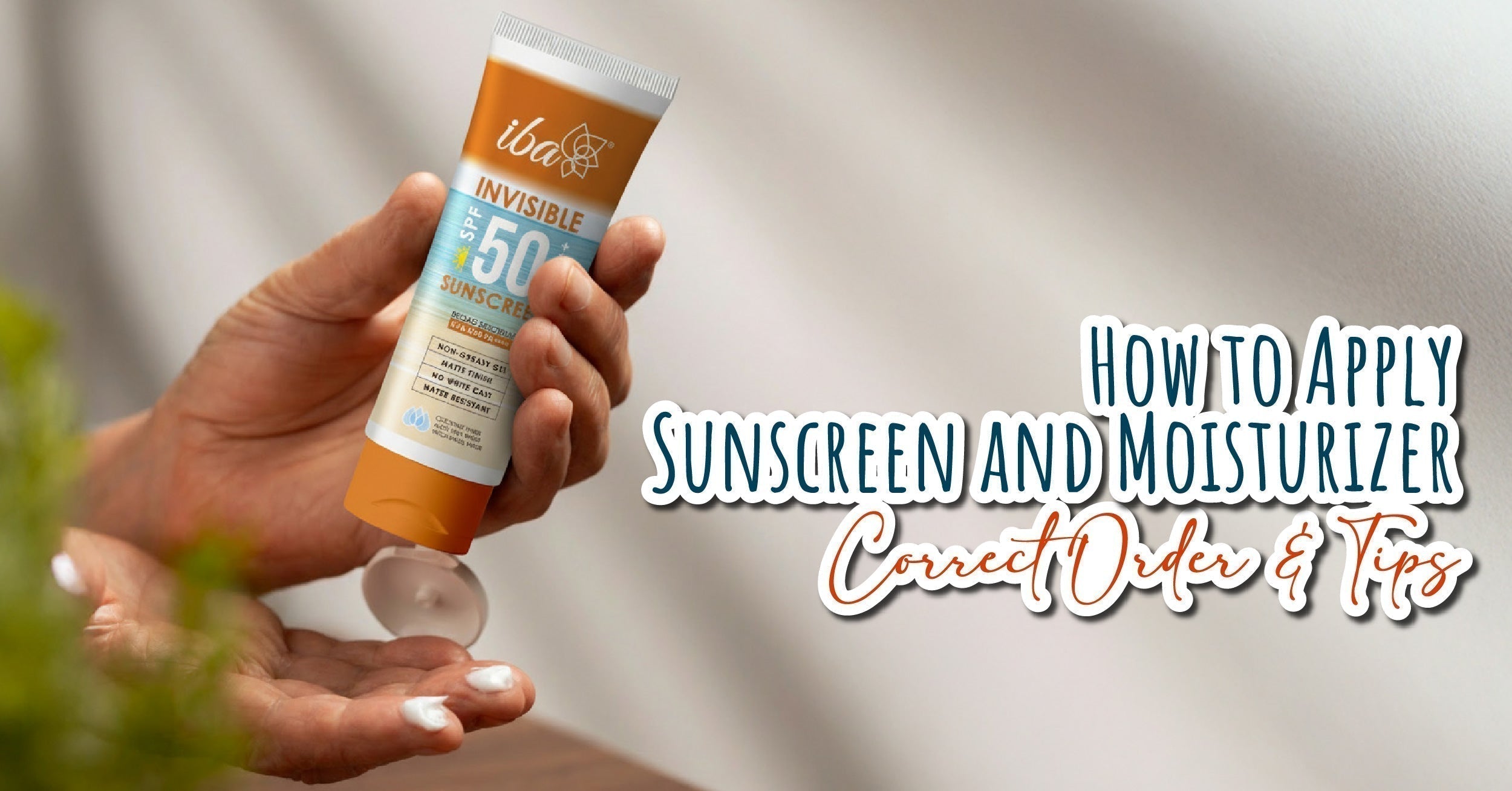
Most people use far too little. The two-finger rule works best: squeeze sunscreen along your index and middle fingers. That covers your face and neck properly.
Step 4: Dot and Spread Evenly
Dot the sunscreen on five points: forehead, both cheeks, nose, and chin. Spread across your entire face using upward strokes. Do not forget the ears, jawline, and back of your neck.
Step 5: Wait Before Stepping Out
Give the sunscreen about 15 minutes to settle before heading outdoors or applying makeup.
Step 6: Reapply Every 2 to 3 Hours
One morning application is not enough for outdoor exposure. Reapply every two to three hours, especially after sweating.
Moisturiser vs Sunscreen: Are They the Same Thing?
No. The two serve very different purposes.
- Moisturiser hydrates, softens, and strengthens your skin barrier. A good face cream prevents dryness and keeps skin nourished.
- Sunscreen blocks or absorbs UV rays to prevent tanning, dark spots, and premature aging.
One keeps skin healthy from the inside. The other shields it from the outside. Replacing one with the other leaves a gap in your routine.
5 Common Sunscreen Mistakes to Avoid
Even regular sunscreen users make errors that reduce protection.
- Using too little: A pea-sized amount is not enough. Two finger-lengths is the minimum for the face and neck.
- Applying to damp skin: Apply to dry skin for proper adhesion unless the product says otherwise.
- Skipping on cloudy days: Up to 80% of UV rays pass through clouds. Sunscreen is needed daily.
- Mixing with other products: Blending sunscreen into foundation dilutes the SPF. Always apply it as a separate layer.
- Forgetting to reapply: A single morning application wears off in two to three hours.
What to Look for in a Good Face Sunscreen
Not all sunscreens are built for facial skin. The sunscreen you pick should match your skin type. Look for:
- Broad-spectrum protection that covers both UVA and UVB rays
- SPF 30 or higher for daily use, SPF 50 for prolonged outdoor exposure
- Non-comedogenic formula that does not clog pores
- Lightweight texture that sits well under makeup
- Free from harsh chemicals like parabens or alcohol
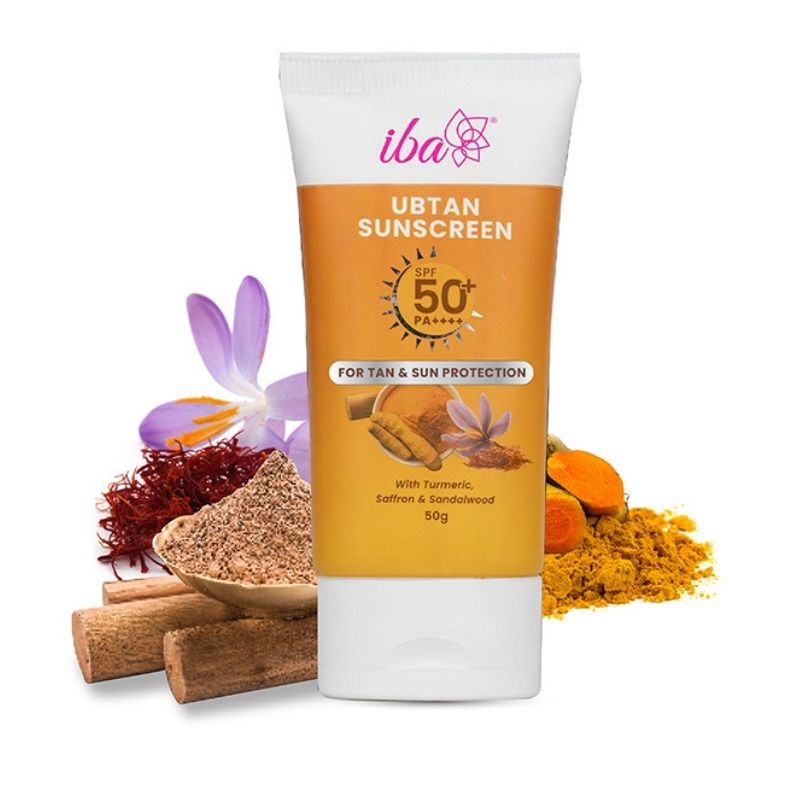
A sunscreen with natural ingredients like turmeric, saffron, and sandalwood adds skincare benefits on top of sun protection.
Wrapping Up
Sunscreen can be applied directly on the face, and many people do exactly that. Comfort and results often depend on your skin type. Oily skin may prefer a lightweight sunscreen alone, while dry or sensitive skin benefits from a layer of moisturiser underneath.
If you are looking to pick up sunscreen or skincare essentials, the Iba Cosmetics Coupon Codes Page has a few offers that could help you sort your essentials for less. With the right products at your fingertips, building a quick, effective, and protective morning routine becomes effortless.
Frequently Asked Questions
Q. Can we apply sunscreen directly on the face without using moisturiser?
Yes. Sunscreen provides UV protection on its own. Moisturiser adds comfort, but is not required for sunscreen to work. Oily skin types can comfortably skip it.
Q. Can I replace my face moisturiser with sunscreen?
Not entirely. Sunscreen protects against UV damage, while moisturiser hydrates and repairs the skin barrier. Some sunscreens include hydrating ingredients, but they do not fully replace a dedicated moisturiser, especially for dry skin.
Q. What is the correct way to apply sunscreen?
Apply two finger-lengths of sunscreen on a clean, dry face. Dot on forehead, cheeks, nose, and chin, then spread evenly. Wait 15 minutes before sun exposure and reapply every two to three hours.
Q. How much sunscreen should I use on my face?
Squeeze sunscreen along your index and middle fingers from base to tip. That covers your face and neck with enough product for proper protection.
Q. Should I wear sunscreen indoors?
UV rays pass through windows, and screens emit blue light that affects skin over time. Wearing sunscreen indoors is a good habit if you sit near windows or spend long hours on screens.